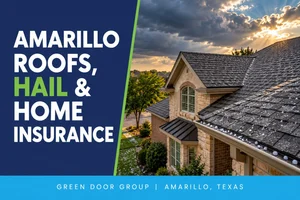
In Amarillo, a roof is more than a line on an inspection report. Hail, high winds, age, prior repairs and insurance requirements can all affect a home purchase or sale—sometimes after the parties are already under contract.
A roof does not have to be visibly leaking to become a transaction issue. Buyers may discover that the roof’s age or condition affects available insurance coverage. Sellers may face inspection findings, documentation questions or last-minute negotiations. The best approach is to investigate early and separate three different questions: What is the roof’s present condition? What coverage will an insurer offer? What do the buyer and seller agree to do?
Why roof questions matter in the Texas Panhandle
The Texas Panhandle regularly experiences severe thunderstorms, hail and damaging wind. That exposure does not mean every roof has storm damage, but it does make roof history and condition especially important when buying or selling an Amarillo home.
The Texas Department of Insurance notes that roof coverage may depend on the roof’s age and condition. Some policies may provide replacement-cost coverage, while others may pay actual cash value or limit roof coverage. Because underwriting rules and policies vary, a buyer should never assume that an existing roof will receive the same coverage the seller has.
Start with the roof’s age and documentation
“How old is the roof?” sounds simple, but the answer is often incomplete. A useful roof history may include:
The approximate installation or replacement date
Invoices, permits, warranties or contractor information
Records of repairs after wind or hail events
Insurance claim documentation, when available
Whether the work covered the entire roof or only one section
Information about shingles, underlayment, flashing and ventilation
A seller who has organized documentation can answer questions more clearly and reduce uncertainty. A buyer should still verify the roof independently instead of treating a receipt or warranty as a substitute for an inspection.
A home inspection and an insurance review answer different questions
A licensed home inspector evaluates observable conditions within the scope of the inspection. A roofer may provide a more focused assessment or estimate. An insurance company decides whether it will insure the property, what roof coverage it will offer and what premium or deductible applies.
Those opinions can differ without any one of them being automatically “wrong.” A roof can be functioning today but still receive limited coverage because of age. A contractor may recommend replacement while an insurer evaluates only covered storm damage. Buyers should understand who is answering which question before relying on the answer.
For a broader look at inspection concerns, read Home Inspection Issues That Can Complicate an Amarillo Sale.
Buyers should request an insurance quote early
Waiting until the final days before closing to shop for homeowners insurance can create unnecessary pressure. Once a buyer is under contract, the buyer should contact a licensed insurance professional, provide accurate property information and ask whether the roof affects coverage, premium, deductible or eligibility.
Useful questions include:
Will the roof be covered at replacement cost or actual cash value?
Is there a separate wind-and-hail deductible?
Is that deductible a flat dollar amount or a percentage of the insured value?
Are there roof-age limitations, cosmetic-damage exclusions or payment schedules?
Does the insurer require additional photos, documentation or an inspection?
Could the quoted terms change after the company completes underwriting?
A quote is not the same as a final policy, and coverage details vary. Buyers should read the proposed policy and endorsements and ask the insurance professional to explain anything unclear.
Replacement cost and actual cash value are not the same
Replacement-cost coverage generally bases a covered claim on the current cost to repair or replace the roof, subject to the policy terms and deductible. Actual-cash-value coverage subtracts depreciation for age and condition, which can leave the homeowner responsible for a larger share of the work.
The Texas Department of Insurance roof guide explains that some insurers change roof coverage as a roof ages. That is why “the house is insured now” does not fully answer a buyer’s question about future coverage.
Understand the wind-and-hail deductible in dollars
A percentage deductible can sound small until it is converted into an actual dollar amount. The percentage may be based on the home’s insured value rather than the repair estimate. Buyers and homeowners should ask the insurer to state the wind-and-hail deductible in dollars and explain when it applies.
Texas law also prohibits contractors from waiving or helping a homeowner avoid an insurance deductible. Be cautious with anyone who promises a “free roof” or offers to disguise the deductible through paperwork or inflated pricing. The Texas Department of Insurance provides additional guidance on roofing deductibles and contractor offers.
Claims history can matter, but it needs context
A prior claim does not automatically mean the roof remains damaged. It may indicate that repairs or replacement were completed. The important questions are what occurred, what work was performed and whether documentation supports the explanation.
A Comprehensive Loss Underwriting Exchange, or CLUE, report can show property-insurance claims reported for a home during the preceding years. According to the Texas Department of Insurance, a homeowner can request the report and review it for accuracy. Buyers should discuss available claims information with their insurance professional rather than drawing conclusions from a claim date alone.
What Amarillo sellers can do before listing
Sellers do not need to replace every older roof automatically. They do need a realistic understanding of the roof and organized information about prior work. Before listing, consider gathering invoices and warranties, reviewing known repairs, checking the attic and ceilings for signs of moisture, and discussing visible concerns with qualified professionals.
Texas seller-disclosure forms address known roof defects and previous roof repairs. Sellers should answer disclosure questions accurately based on their knowledge and consult the appropriate professional if they are uncertain about legal obligations. The current form is available through the Texas Real Estate Commission.
If the roof needs attention, the right strategy depends on condition, timing, expected buyer concerns, financing and the seller’s goals. Our guide to selling as-is versus making repairs first explains how to evaluate that larger decision.
How roof issues can affect negotiations and closing
When a roof concern appears under contract, possible solutions may include repairs, replacement, a price adjustment, a seller concession or another written agreement. The workable option depends on the contract, lender requirements, insurance availability, repair timing and the parties’ priorities.
A repair estimate does not automatically equal a dollar-for-dollar price reduction, and an insurance claim is not guaranteed simply because a storm occurred. The parties should rely on written information from inspectors, contractors, insurers and lenders—and document negotiated changes through the proper contract forms.
Roof costs may also affect a seller’s expected proceeds. See How Much Does It Cost to Sell a House in Amarillo, Texas? for a broader look at expenses that can influence the final net.
A practical Amarillo roof checklist
For buyers:
Ask about roof age, repairs and available documentation.
Complete inspections within the contractual timeline.
Request insurance quotes early.
Compare coverage—not only premiums.
Convert percentage deductibles into dollar amounts.
Keep the lender informed if insurability or repairs become an issue.
For sellers:
Gather invoices, warranties and claim or repair records.
Disclose known conditions accurately.
Avoid making unsupported claims about remaining roof life.
Get written estimates when a known concern may affect the sale.
Discuss repair, pricing and timing options before accepting an offer.
Make the roof part of the plan—not a closing-week surprise
The strongest transactions address roof questions with documentation, qualified opinions and enough time to make informed decisions. Green Door Group helps Amarillo-area buyers and sellers coordinate inspections, estimates, insurance questions and negotiations without pretending that one answer fits every property.
Contact Green Door Group to discuss your Amarillo home purchase or sale, or search current Amarillo-area homes for sale.
This article is provided for general educational purposes and is not legal, insurance, roofing, tax or financial advice. Coverage, underwriting, property conditions and contract requirements vary. Consult appropriately licensed professionals regarding your specific situation.